
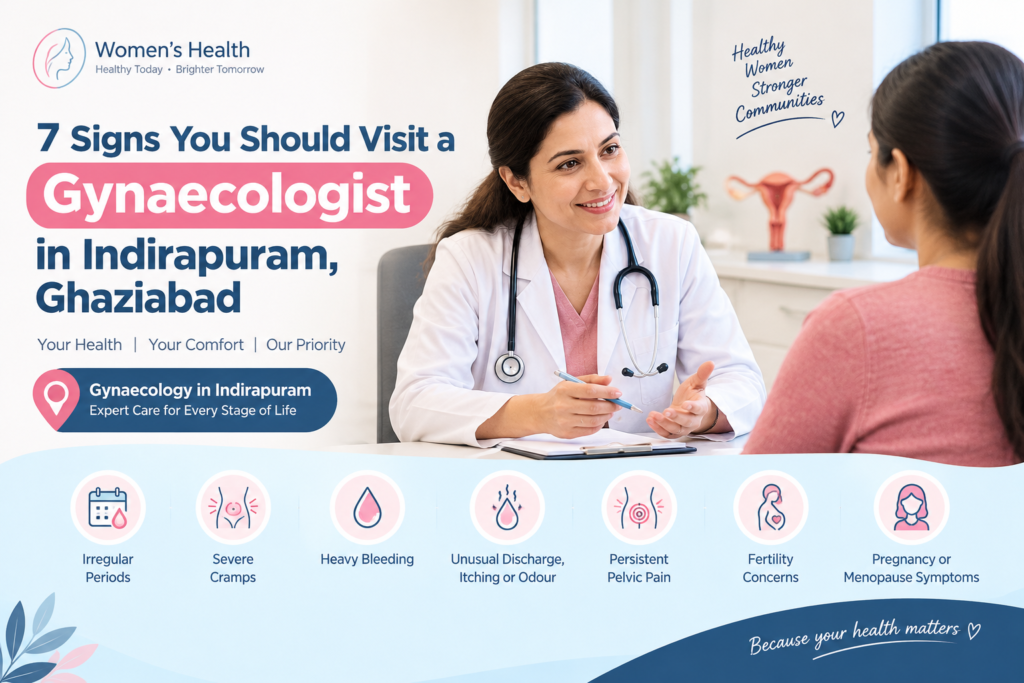
Women’s health needs attention at every stage of life, from adolescence and menstruation to pregnancy and menopause. However, many women ignore unusual symptoms because of busy schedules, hesitation, or the belief that discomfort is normal. If you experience irregular periods, severe menstrual cramps, unusual vaginal discharge, or persistent pelvic pain, consulting a qualified specialist for Gynaecology in Indirapuram can help you understand the possible causes and explore appropriate care. Recognising these warning signs early can help you make informed decisions about your reproductive health.
This guide explains seven symptoms that may require a gynaecological consultation, when to seek urgent medical attention, and how to choose a suitable specialist in Indirapuram, Ghaziabad.
1. Irregular or Missed Periods
Menstrual cycles can change because of stress, weight fluctuations, pregnancy, hormonal changes, or certain medical conditions. However, repeated irregularities or unexplained missed periods should not be ignored.
Watch for these signs:
- Periods that repeatedly arrive earlier or later than expected.
- Missed periods without a clear explanation.
- Changes in bleeding patterns over several cycles.
- Irregular periods accompanied by unusual weight changes or increased facial hair.
Conditions such as polycystic ovary syndrome (PCOS) and thyroid disorders can affect menstruation. A doctor may review your menstrual history and recommend pregnancy testing, blood tests, or other investigations when appropriate.
What should you do? Track your period dates and symptoms. Arrange a consultation if irregularities persist or your periods stop unexpectedly.
2. Severe Menstrual Cramps
Mild cramps are common during menstruation, but severe or worsening pain deserves medical attention, especially when it interferes with everyday activities.
You should consider a consultation if you experience:
- Pain that prevents you from working, studying, or completing daily activities.
- Menstrual cramps that become progressively worse.
- Pelvic pain that continues after your period.
- Pain during sexual intercourse.
Severe menstrual pain can sometimes be associated with endometriosis, adenomyosis, or uterine fibroids. Because these conditions can produce similar symptoms, an individual medical assessment is important.
A qualified women’s health doctor near Indirapuram can evaluate your symptoms and determine whether an examination or further investigations are needed.
3. Heavy Menstrual Bleeding or Bleeding Between Periods
Unusually heavy menstrual bleeding or repeated bleeding between periods may indicate an underlying health concern.
Possible warning signs include:
- Bleeding that lasts longer than seven days.
- Frequently needing to change sanitary protection every one to two hours.
- Passing unusually large blood clots.
- Bleeding after sexual intercourse.
- Any vaginal bleeding after menopause.
Heavy menstrual bleeding can cause iron deficiency or anaemia, leading to fatigue, weakness, dizziness, or breathlessness. Depending on your symptoms, a doctor may recommend blood tests or an ultrasound.
When is it urgent? Seek urgent medical attention if very heavy bleeding is accompanied by fainting, severe dizziness, chest pain, or breathlessness. Bleeding with possible pregnancy and abdominal pain also requires prompt assessment.
4. Unusual Vaginal Discharge, Itching, or Odour
Vaginal discharge is normal and can change throughout the menstrual cycle. However, a noticeable change accompanied by itching, burning, an unusual smell, or pelvic discomfort may indicate an infection or another condition.
Look out for:
- Persistent vaginal itching or irritation.
- Discharge with a strong or unusual odour.
- Unusual yellow, green, or grey discharge.
- Burning or pain while urinating.
- Pelvic pain alongside abnormal discharge.
Different infections and conditions can cause similar symptoms, so treatment depends on the underlying cause. Avoid self-medicating with antibiotics or vaginal creams without appropriate medical advice.
If symptoms persist or recur, arrange a consultation to determine whether testing or specific treatment is necessary.
5. Persistent Lower Abdominal or Pelvic Pain
Pelvic pain may feel like a dull ache, pressure, heaviness, or sharp discomfort in the lower abdomen. It can affect your sleep, work, and daily activities.
Possible causes include ovarian cysts, endometriosis, pelvic infections, and other gynaecological conditions. Urinary and digestive problems can also produce similar symptoms.
If your pain keeps returning, becomes worse, or occurs alongside unusual bleeding or discharge, arrange a medical assessment rather than relying only on painkillers.
Seek urgent care for sudden, severe pelvic pain, particularly if it occurs with vomiting, fever, fainting, or possible pregnancy.
6. Difficulty Conceiving or Planning a Pregnancy
A preconception consultation can help you understand how to prepare for pregnancy and identify health factors that may need attention.
Consider seeking fertility advice if:
- You have tried to conceive for 12 months without success and are under 35.
- You have tried for six months without success and are aged 35 or older.
- Your periods are irregular or absent.
- You have a known reproductive health condition or previous fertility concerns.
Women over 40 and those with known fertility-related conditions may benefit from earlier evaluation.
A consultation may cover menstrual cycles, ovulation, medications, existing health conditions, and appropriate pre-pregnancy checks. Your doctor can recommend the next steps based on your individual circumstances.
7. Unusual Symptoms During Pregnancy or Menopause
Pregnancy and menopause bring physical and hormonal changes, but certain symptoms require medical attention.
During pregnancy, attend recommended antenatal appointments and discuss any concerns with your healthcare professional. Vaginal bleeding, severe abdominal pain, severe headache, visual disturbances, or reduced fetal movement later in pregnancy require prompt medical assessment.
During perimenopause and menopause, symptoms may include hot flashes, sleep disturbances, vaginal dryness, and changes in menstrual cycles. A healthcare professional can discuss suitable management options.
Important: Any vaginal bleeding after menopause should be evaluated by a doctor, even if it happens only once.
How to Choose a Gynaecologist in Indirapuram, Ghaziabad
Finding the right specialist involves more than choosing the nearest clinic. You should feel comfortable discussing your concerns and receive clear explanations about investigations and treatment.
Before booking an appointment, consider:
- Qualifications: Verify the doctor’s medical qualifications and professional registration.
- Relevant experience: Look for experience related to your symptoms or healthcare needs.
- Communication: Choose a professional who listens carefully and explains available options.
- Appropriate care: Investigations should be based on your symptoms, medical history, and clinical assessment.
- Accessibility: Consider appointment availability, clinic location, and follow-up arrangements.
If you are specifically looking for a female Gynaecology in Niti Khand, verify the individual doctor’s qualifications, consultation location, and availability before booking. Confirm the details directly with the clinic rather than relying on an online listing alone.
Frequently Asked Questions (FAQs)
1. When should I visit a gynaecologist in Indirapuram?
Consider a consultation if you experience irregular periods, severe menstrual cramps, heavy bleeding, unusual vaginal discharge, persistent pelvic pain, or fertility concerns. Seek urgent care for severe or rapidly worsening symptoms.
2. What are the common signs of gynaecological problems?
Common signs include menstrual irregularities, unusually heavy bleeding, bleeding between periods, persistent pelvic pain, vaginal itching, unusual discharge, and pain during sexual intercourse. These symptoms can have several causes and may require medical evaluation.
3. Can irregular periods indicate a hormonal problem?
Yes. Irregular periods can be associated with PCOS, thyroid disorders, and other hormonal changes. Pregnancy, stress, and weight fluctuations may also affect menstruation. A doctor can assess the possible cause and recommend appropriate tests.
4. How do I choose a qualified gynaecologist near Indirapuram?
Check the doctor’s qualifications, professional registration, relevant experience, communication style, and follow-up arrangements. Choose a healthcare professional who explains your options clearly and respects your concerns.
5. When should I consult a gynaecologist for period pain?
Seek an assessment if period pain is severe, repeatedly affects daily activities, becomes progressively worse, or continues after menstruation. Sudden, severe pelvic pain requires urgent medical assessment.
Conclusion
Irregular periods, severe menstrual cramps, unusual bleeding, persistent pelvic pain, abnormal vaginal discharge, fertility difficulties, and concerning pregnancy or menopause symptoms are reasons to consider professional medical advice.
Not every symptom indicates a serious condition, but persistent or unusual changes should not be ignored. Recognising these seven signs can help you understand when to seek care and make informed decisions about your reproductive health.