
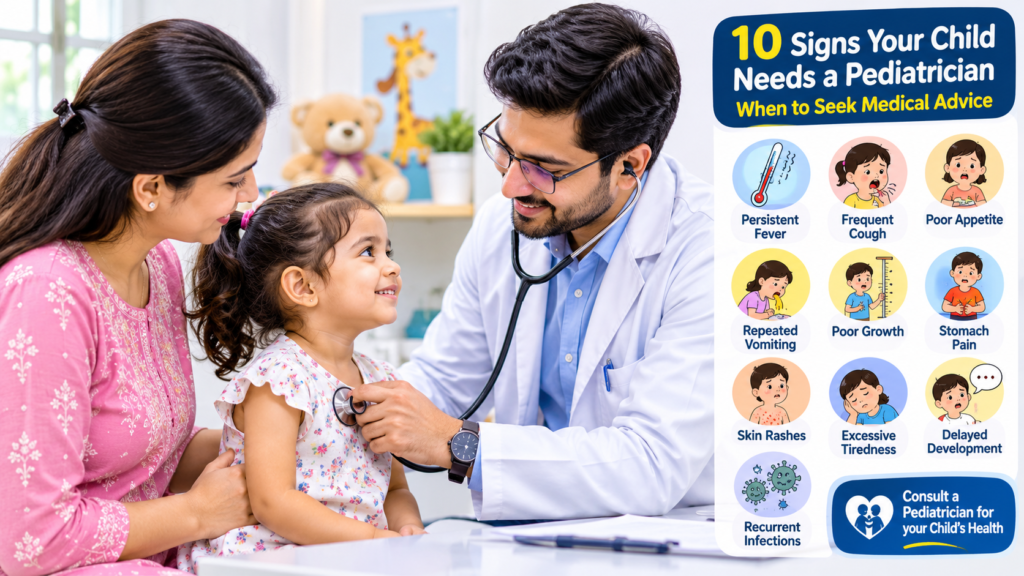
Children experience different health concerns as they grow, from common infections and digestive problems to feeding difficulties and developmental changes. Although many childhood illnesses are mild, certain symptoms may indicate an underlying medical condition that requires professional attention. Recognising early warning signs can help parents make informed decisions and seek appropriate healthcare.
Understanding when to see a pediatrician is particularly important during infancy and early childhood, when children may not be able to explain their discomfort clearly. Parents should pay attention to changes in their child’s behaviour, appetite, sleep, physical activity and overall development.
For families in Indirapuram and Ghaziabad, knowing about common childhood illness symptoms and accessing appropriate medical support can make healthcare decisions easier.
10 Signs Your Child Needs a Pediatrician
1. Persistent or High Fever
Fever is commonly associated with infections in children. However, persistent fever, worsening symptoms or fever accompanied by unusual behaviour should be evaluated by a healthcare professional.
A baby younger than three months with a temperature of 38°C (100.4°F) or higher requires immediate medical assessment, even if the baby appears otherwise well. Older children also need attention when fever is accompanied by dehydration, breathing difficulties or unusual drowsiness.
2. Frequent Cough, Cold or Breathing Difficulties
Occasional coughs and colds are common during childhood. However, persistent coughing, wheezing, rapid breathing or difficulty breathing may indicate a respiratory problem that needs medical evaluation.
Parents should watch for chest retractions, grunting or unusual breathing sounds. Severe breathing difficulties, blue or grey lips, or pauses in breathing require emergency medical attention.
3. Poor Appetite or Feeding Difficulties
Changes in appetite can occur during normal childhood development. However, persistent refusal to eat, difficulty swallowing, reduced breastfeeding or feeding problems in infants should not be ignored.
Parents should monitor feeding patterns, fluid intake and energy levels. Poor feeding accompanied by weakness or reduced urination requires prompt medical assessment.
4. Repeated Vomiting or Diarrhoea
Repeated vomiting and diarrhoea can cause dehydration, particularly in infants and young children.
Warning signs include dry mouth, sunken eyes, fewer wet nappies, reduced urination and unusual tiredness. If a child cannot keep fluids down or shows signs of significant dehydration, seek urgent medical care.
5. Unexplained Weight Loss or Poor Growth
A child’s height and weight are important indicators of overall health. Poor weight gain, unexplained weight loss or a noticeable change in growth patterns may indicate nutritional concerns or an underlying medical condition.
A regular pediatric health checkup helps healthcare professionals monitor growth and identify potential concerns that may require further investigation.
6. Persistent Stomach Pain
Occasional stomach discomfort may occur because of constipation, dietary changes or minor infections. However, repeated abdominal pain, severe discomfort or pain accompanied by fever and vomiting should be medically evaluated.
Sudden or severe abdominal pain requires urgent assessment. Parents should avoid giving medicines without appropriate medical advice.
7. Unusual Skin Rashes or Allergic Reactions
Skin rashes can develop because of allergies, infections, irritation or other skin conditions. Parents should seek medical advice if a rash spreads quickly, persists, becomes painful or occurs alongside fever.
Swelling of the tongue or throat, breathing difficulties or collapse may indicate a severe allergic reaction. Seek emergency medical assistance immediately.
8. Unusual Behaviour or Excessive Tiredness
Changes in a child’s normal behaviour can sometimes indicate illness. Persistent irritability, unusual sleepiness, reduced interaction, loss of interest in playing or excessive tiredness should be observed carefully.
A child who becomes difficult to wake, confused or unresponsive needs emergency medical attention.
9. Delayed Speech or Developmental Milestones
Children develop at different rates, but significant delays in speech, movement, communication or social interaction deserve professional assessment.
Monitoring children’s health and development helps identify concerns early. A healthcare professional can evaluate developmental progress and recommend further assessment or early intervention when appropriate.
10. Recurrent Infections
Repeated respiratory infections, ear infections, skin infections or other recurring health problems may require further investigation.
Parents should maintain a record of previous illnesses, prescribed medicines, symptoms and recovery periods. Recognising the signs of infection in children can help parents understand when a medical assessment may be necessary.
When Should Parents Take Their Child to a Doctor?
Parents often ask, when should I take my child to a doctor? A medical consultation is advisable when symptoms persist, repeatedly return, become worse or interfere with normal eating, sleeping, playing and daily activities.
The following are important warning signs of illness in children that require particular attention:
- Fever in babies younger than three months.
- Severe breathing difficulties or blue or grey lips.
- Inability to drink or breastfeed.
- Signs of significant dehydration.
- Seizures or loss of consciousness.
- Difficulty waking or unusual unresponsiveness.
- A rash that does not fade when pressed.
These are situations in which a child needs medical attention without delay. Do not wait for a routine appointment when serious symptoms occur. Seek emergency medical assistance.
Choosing Paediatric Care in Indirapuram, Ghaziabad
Choosing appropriate medical support is an important part of maintaining children’s health. Parents looking for a Pediatrician in Indirapuram should consider the doctor’s qualifications, professional registration, clinical experience, consultation arrangements and availability for follow-up care.
Umang Medical Centre in Indirapuram is a local healthcare option where parents can enquire about paediatric consultations with Dr. Abhishek Jain. Contact the centre to confirm current consultation availability, appointment timings and services.
If you are searching for a Child specialist in Indirapuram, consider discussing your child’s symptoms, previous medical history, growth concerns and developmental progress during the consultation.
Families looking for a Pediatrician near me should also verify the doctor’s credentials, clinic location and appointment arrangements before visiting.
Appropriate child healthcare includes preventive checkups, monitoring growth, reviewing vaccination status and addressing concerns as children grow. A professional pediatric consultation can help determine whether further examination or investigation is needed.
Frequently Asked Questions
1. What are the common signs that a child needs medical attention?
Persistent fever, breathing difficulties, poor feeding, dehydration, repeated vomiting, unusual tiredness and developmental concerns are important symptoms that may require medical assessment.
2. When should parents worry about a child’s fever?
A temperature of 38°C or higher in a baby younger than three months requires immediate medical assessment. Fever accompanied by breathing difficulties, seizures, dehydration or unusual drowsiness also needs urgent attention.
3. Why are regular child health checkups important?
Regular checkups help monitor physical growth, nutrition, vaccination status and developmental milestones. They also allow parents to discuss child health problems and symptoms with a qualified healthcare professional.
4. Can recurring infections indicate an underlying health problem?
Repeated infections can have several causes. A healthcare professional can review the child’s medical history, evaluate symptoms and determine whether further investigations are necessary.
5. How can parents support their child’s healthy development?
Parents can support healthy development through balanced nutrition, adequate sleep, routine vaccinations, age-appropriate physical activity and regular medical checkups. Any developmental concerns should be discussed with a healthcare professional.
Consult Umang Medical Centre for Paediatric Care in Indirapuram
Recognising early warning signs is an important part of protecting your child’s health. Persistent fever, breathing difficulties, poor feeding, dehydration, recurring infections and developmental concerns should never be overlooked.
Timely medical evaluation can help identify potential health problems and guide appropriate care. Parents in Indirapuram and nearby Ghaziabad can contact Umang Medical Centre to enquire about paediatric consultations with Dr. Abhishek Jain.
Concerned about your child’s health? Contact Umang Medical Centre to enquire about paediatric consultation availability and appointment arrangements.
Medical Disclaimer: This article is intended for general educational purposes and does not replace professional medical advice, diagnosis or treatment. Always consult a qualified healthcare professional regarding your child’s health concerns. Seek emergency medical care for serious symptoms.